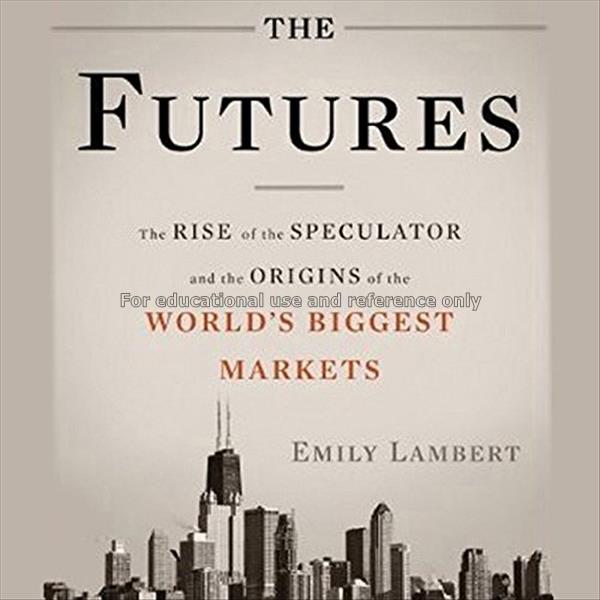
In the late 1800s, the Chicago Sanitary and Ship Canal was completed, creating the only shipping link between the Great Lakes and the Mississippi River system. As Chicago became a major trading hub, a group of businessmen formed an organization called the Chicago Board of Trade that would centralize the trading of wheat, corn, and other grains. To minimize the risk of fluctuating grain prices, farmers used the exchange to lock in a price for a promise to deliver the crop at a future date, and the futures contract was born. In 1898, the Chicago Mercantile Exchange opened to trade in perishables such as butter, eggs, and onions. Lambert tells the colorful history of these commodity markets, which were designed to hedge risk for farmers but became hotbeds for speculators, fast-deal makers, and shrewd manipulators. The chapters are organized chronologically by the commodities that were added to the “pits,” such as pork bellies, currencies, stock options, oil, and bonds. Lambert, a senior writer for Forbes magazine, keeps the story moving with a surprising litany of legendary traders you probably never heard of until now
| Barcode | Call No. | Volume | Status | Due Date | Total Queue | |
|---|---|---|---|---|---|---|
| 1010075996 | IK00158 |
On Closed Stack |
0 | Please Login |