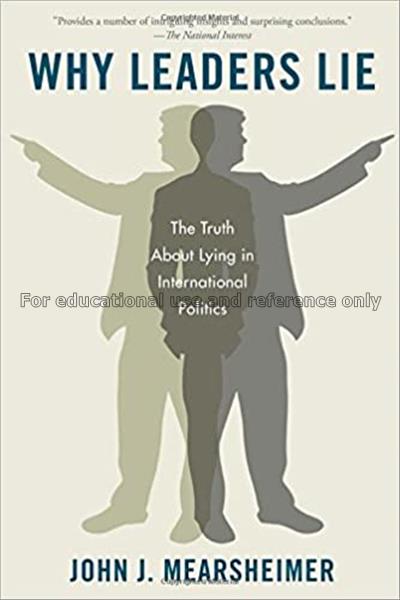
In Why Leaders Lie, Mearsheimer provides the first systematic analysis of lying as a tool of statecraft, identifying the varieties, the reasons, and the potential costs and benefits. Drawing on a wealth of examples, he argues that leaders often lie for good strategic reasons, so a blanket condemnation is unrealistic and unwise. Yet there are other kinds of deception besides lying, including concealment and spinning. Perhaps no distinction is more important than that between lying to another state and lying to one's own people. Mearsheimer was amazed to discover how unusual interstate lying has been; given the atmosphere of distrust among the great powers, he found that outright deceit is difficult to pull off and thus rarely worth the effort. Moreover, it sometimes backfires when it does occur. Khrushchev lied about the size of the Soviet missile force, sparking an American build-up. Eisenhower was caught lying about U-2 spy flights in 1960, which scuttled an upcoming summit with Krushchev. Leaders are more likely to mislead their own publics than other states, sometimes with damaging consequences. Though the reasons may be noble--Franklin Roosevelt, for example, lied to the American people about German U-boats attacking the destroyer USS Greer in 1940, to build a case for war against Hitler-they can easily lead to disaster, as with the Bush administration's falsehoods about Iraq's weapons of mass destruction
| Barcode | Call No. | Volume | Status | Due Date | Total Queue | |
|---|---|---|---|---|---|---|
| 1010079530 | SD00146 |
Available |
0 | Please Login |


