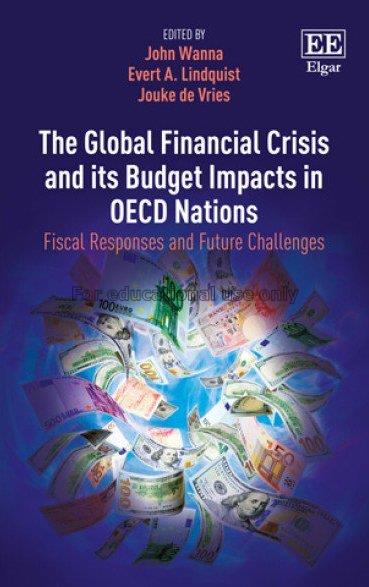
The global financial crisis of 2007-09 constituted the biggest shock to the economies of the OECD nations since the Second World War, testing budgetary systems and causing most of their governments to move into intense crisis mode. Policy responses by governments and international authorities included massive interventions to stabilize markets and economies, and significant adjustments to fiscal policy regimes. How governments reacted to the crisis, which was manifested differently in each jurisdiction, had significant political implications for sitting governments and led to reforms of fiscal policy and budgetary regimes, which have since continued to wrestle with slow economic growth and strained public finances. This singular shock provides the editors and authors of this book with an intriguing opportunity to examine how different OECD budgetary systems performed. The contributions frame and assess how governments responded to the challenge and how their budget systems evolved in the aftermath, with a focus on strategy, decision-making and balancing competing demands. Chapters cover the EU, North America and Asia, including comparison between countries that fared well, those who were moderately affected and those countries massively affected by the global financial crisis
| Barcode | Call No. | Volume | Status | Due Date | Total Queue | |
|---|---|---|---|---|---|---|
| 1040005060 | FM00250 |
Available |
0 | Please Login |